HEcsGravitySim: A High-Performance Gravity Simulation in Unity
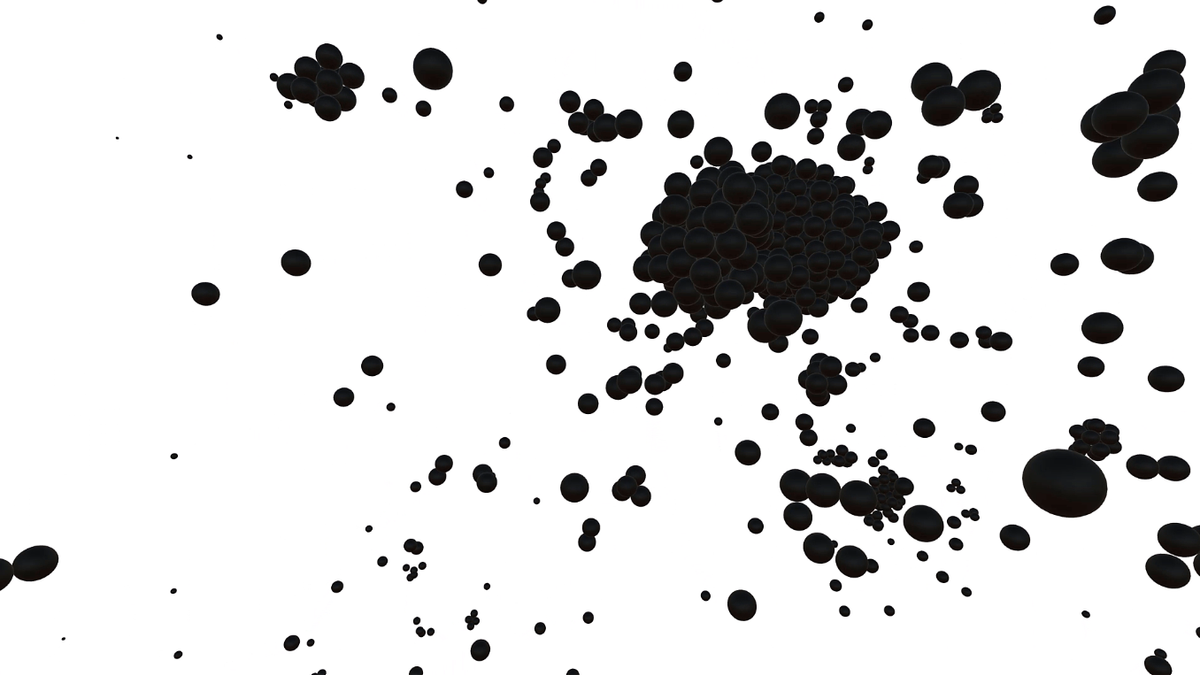
HEcsGravitySim is a multi-threaded gravity simulation using Unity's ECS and Job System for real-time performance. 🚀
Introduction
Gravity simulations are computationally expensive, especially when dealing with numerous objects. In this project, HEcsGravitySim, we tackle this challenge using Unity's ECS (Entity Component System) and Job System to leverage multi-threading for real-time calculations. Instead of processing thousands of gravitational interactions on a single thread, which would be highly inefficient, we distribute the computations across multiple threads for a significant performance boost.
The Problem: Gravity Calculation Bottleneck
In a naive implementation of a gravity simulation, each planet applies a force to every other planet. This results in a nested loop with O(n²) complexity, where each frame requires computing forces for every pair of planets. With 1000 planets, this means 1,000,000 force calculations per frame! Running this on a single thread would lead to severe performance issues.
The Solution: Multi-Threading and Data-Oriented Programming
To overcome this computational bottleneck, we use Unity's Data-Oriented Technology Stack (DOTS), which includes:
- Job System – Enables multithreaded computations efficiently.
- ECS (Entity Component System) – Provides a high-performance, data-oriented programming model.
- Hybrid Renderer Package – Ensures optimized rendering.
- Unity Physics (Havok Physics) – Handles physics interactions accurately.
By structuring the simulation using ECS and Jobs, we efficiently distribute calculations across multiple CPU cores, leading to a significant boost in performance and real-time simulation capabilities.
Gravity Calculation Formula
The gravitational force between two planets is calculated using Newton's Law of Universal Gravitation:
F=Gm1m2r2F = G \frac{m_1 m_2}{r^2}
Where:
- FF is the gravitational force,
- GG is the gravitational constant,
- m1,m2m_1, m_2 are the masses of the two planets,
- rr is the distance between the two planets.
Unity Implementation Example:
float3 direction = planet2.Position - planet1.Position;
float distanceSquared = math.lengthsq(direction) + 0.0001f; // Avoid division by zero
float forceMagnitude = (G * planet1.Mass * planet2.Mass) / distanceSquared;
float3 force = math.normalize(direction) * forceMagnitude;
Project Breakdown
1. Random Planet Generator
- A class that generates randomly placed planets within the simulation space.
- Assigns each planet a random velocity and mass.
2. Planet Component Data
- Stores essential planet properties such as:
- Position
- Velocity
- Mass
3. Gravity System
- Uses Entity Query to fetch all planets.
- Executes a multithreaded job each frame to calculate gravitational forces efficiently.
- Applies forces to the Velocity Component, allowing the physics engine to update positions automatically.
4. Job System for Parallel Processing
- Each frame, the system:
- Loops over all planet entities using nested loops.
- Distributes the calculations across multiple CPU cores using Jobs.
- Applies the calculated forces to update velocity components.
- The physics engine then computes the new positions.
Performance Gains
By implementing ECS and Job System, we achieve:
- Massively improved performance due to parallel processing.
- Real-time gravity simulation with thousands of planets.
- Efficient memory management, reducing CPU bottlenecks.
- Smooth rendering using the Hybrid Renderer package.
Conclusion
HEcsGravitySim showcases the power of Data-Oriented Programming in Unity, enabling efficient and scalable physics simulations. With ECS, Job System, and Unity Physics, we can simulate complex gravitational interactions at real-time speeds, even with thousands of entities.
If you're interested in high-performance game development or physics simulations, exploring Unity's DOTS ecosystem is a great step forward!
Stay tuned for further improvements and optimizations! 🚀
GitHub Repository
Check out the source code on GitHub: HEcsGravitySim